When a drain backs up, homeowners are often given two very different-sounding options: snake it or hydro jet it. One sounds simple and inexpensive. The other sounds powerful and thorough.
The truth is less dramatic. Neither method is automatically “better.” The better choice depends on what is blocking the pipe, how often the problem returns and whether the pipe itself is healthy enough for the proposed cleaning method.
If you want to avoid paying for the wrong service, start with what each tool is designed to accomplish.
Snaking: targeted mechanical clearing
A drain snake uses a rotating cable and attachment to reach into a drain and break through or remove an obstruction. It is one of the oldest and most useful tools in plumbing for a reason.
Snaking is often a good fit when the blockage is localized and relatively straightforward: hair in a bathroom line, a soft obstruction, paper buildup, or an isolated clog that has not become a recurring pattern.
Its strength is speed and simplicity. Its limitation is that it may open a channel without removing all material from the pipe walls.
Think of it as restoring a path.
Hydro jetting: cleaning more of the pipe surface
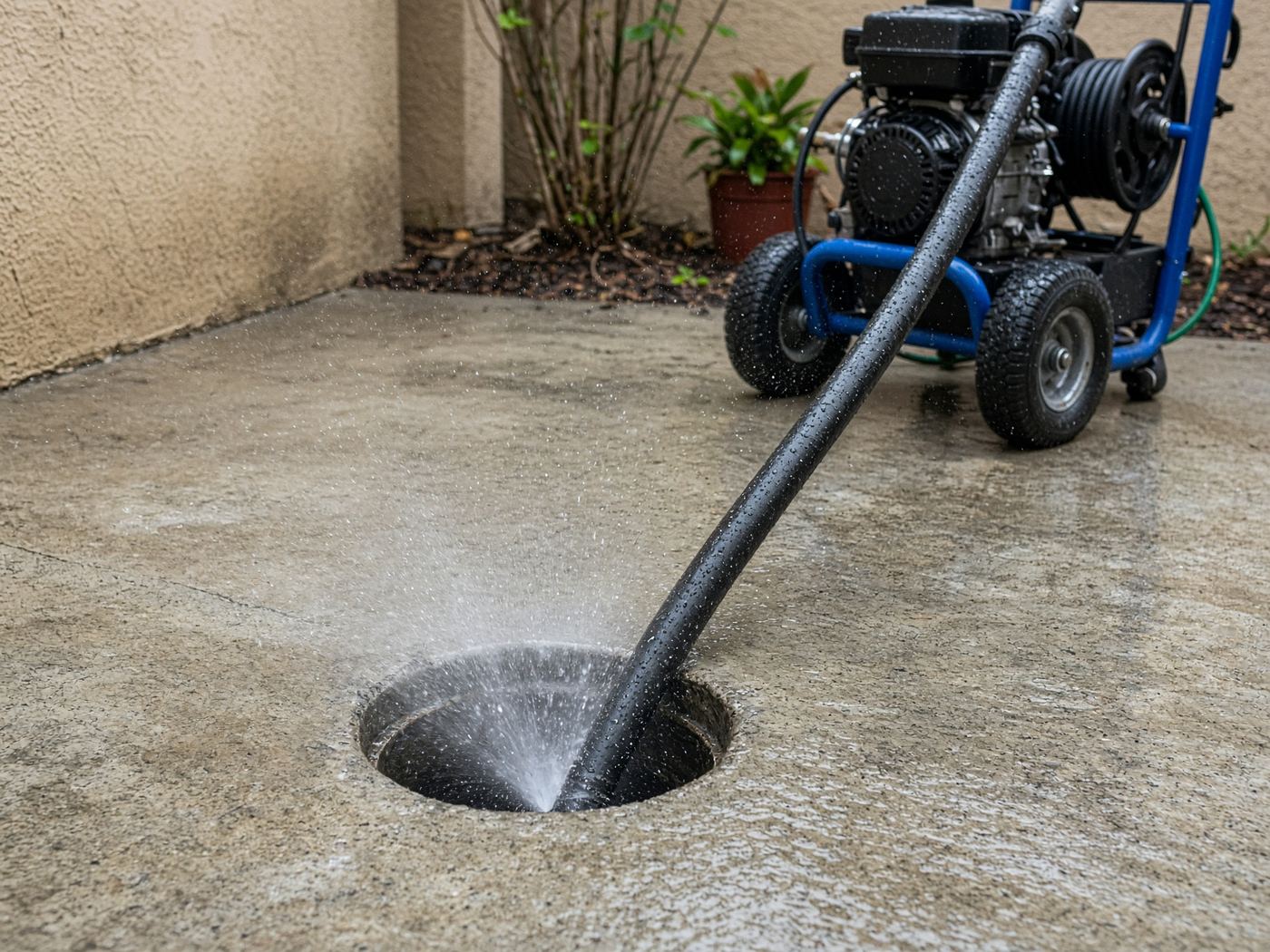
Hydro jetting sends high-pressure water through a hose and specialized nozzle. Rather than cutting only a small path, the water can remove grease, sludge and buildup from a much larger portion of the interior pipe surface.
This can be valuable in lines that repeatedly accumulate grease or heavy deposits. Commercial kitchens are an obvious example, but residential kitchen and main lines can also develop significant buildup over time.
Think of hydro jetting as a more comprehensive cleaning method — when the pipe condition and blockage make it appropriate.
Which method costs less?
The cheapest invoice today is not always the lowest cost over a year.
If a one-time clog is quickly solved with a snake and never returns, paying for hydro jetting would have been unnecessary. If a greasy line is snaked every few months because the cable keeps reopening only a narrow path, repeated low-cost service calls may eventually cost more than a thorough cleaning.
The key is recurrence.
A homeowner should ask: Is this the first time, or is this a pattern?
When snaking is usually the sensible first choice
Snaking often makes sense when:
- One fixture is affected.
- The clog is recent and has not happened repeatedly.
- The suspected blockage is hair, paper or another localized obstruction.
- The pipe is not heavily coated with grease or scale.
- A less aggressive method can reasonably solve the problem.
A good plumber does not need to bring out the most expensive equipment for every slow drain.
When hydro jetting may provide better value
Hydro jetting is worth discussing when:
- A line repeatedly clogs despite prior snaking.
- Heavy grease or sludge is suspected.
- A larger section of pipe needs to be cleaned rather than simply opened.
- Maintenance history shows repeated buildup.
- Camera findings and pipe condition support a more thorough cleaning.
The phrase “pipe condition” matters. High-pressure cleaning should be selected responsibly. If a line is seriously damaged, fragile or partially collapsed, the structural problem may need to be addressed instead of simply cleaned harder.
Where a sewer camera fits
For recurring main-line issues, a camera can be more valuable than arguing about which cleaning method sounds stronger.
A camera inspection can help reveal roots, cracks, separated joints, offsets, corrosion and other structural conditions. It can also show whether a line is relatively sound but dirty.
That information changes the decision.
If the camera shows intact piping coated in buildup, jetting may make sense. If it shows roots entering through a failed joint, cleaning may restore flow temporarily but will not repair the opening. If it shows a severe structural defect, replacement or a targeted repair may be the better long-term conversation.
What about tree roots?
Snaking machines can use cutting heads to remove roots from a sewer line. Hydro jetting can also help remove debris associated with root intrusion. But neither method repairs the point where roots are entering.
If roots keep returning, the most important question is not “snake or jet?” It is “what does the pipe look like after it is cleared?”
A documented camera inspection can help you decide whether periodic maintenance is acceptable or whether a repair is justified.
Questions to ask before paying for hydro jetting
Hydro jetting is useful equipment, which also means it can be oversold. Before approving it, ask:
- What evidence suggests jetting is better than snaking in my case?
- Has this line been inspected or is its condition otherwise known?
- What type of buildup are you trying to remove?
- Is the quoted price for one line or the main sewer?
- Will you verify flow after cleaning?
- Would a camera inspection change the recommendation?
You are looking for a technical explanation, not “this machine is stronger.”
Questions to ask before accepting another snake service
The same skepticism should apply in the other direction. If you have paid to snake the same line several times, ask why the problem keeps returning.
A plumber should be able to tell you whether the cable is removing a recurring obstruction, whether buildup remains on the pipe walls, or whether there may be a structural issue that deserves inspection.
The best answer is sometimes neither
If a sewer line is broken, badly offset or collapsed, the smartest use of money may be repair rather than repeated cleaning. If the clog is inside a small fixture trap, neither hydro jetting nor a main-line cable may be necessary.
This is why diagnosis comes first.
For Los Angeles homeowners, the value equation is simple: use the least invasive method that reliably solves the actual problem. Snaking can be excellent. Hydro jetting can be excellent. Both become expensive when they are used as substitutes for understanding why the drain is failing.
If your line has backed up more than once, ask for the history, the evidence and the expected result before choosing the equipment.
Talk with Extreme Plumbing & Rooter
Extreme Plumbing & Rooter is a licensed Los Angeles plumbing company (CA #1086230) serving homes and businesses 24/7. If you want a clear diagnosis and a free, no-pressure estimate, call (818) 631-7296 or send a short message.