
A beautiful mature tree can add shade and character to a Los Angeles property. Its roots do not care where your sewer line is.
Roots naturally seek moisture. If an underground sewer pipe has a crack, loose joint or other opening, fine roots can enter and expand over time. What begins as a small intrusion can catch paper and debris, restrict flow and eventually create a backup inside the house.
The frustrating part is that root problems are often treated as “just another clog” until the pattern becomes impossible to ignore.
The warning sign most homeowners miss: repetition
A single main-line blockage can happen for many reasons. Repeated backups in the same sewer are different.
If the line is cleared, works normally for a period and then clogs again, ask what was removed. If roots are repeatedly found, you now have evidence of an access point in the pipe.
Cutting the roots may restore flow, but it does not automatically repair the opening they used to enter.
That distinction is the difference between maintenance and repair.
Warning sign #2: several drains react together
A root obstruction in the main sewer can affect multiple fixtures. You may notice a toilet bubbling when another fixture drains, a shower backing up when the washing machine runs, or water appearing at the lowest drain in the house.
Those symptoms suggest the blockage may be downstream of several fixtures rather than inside one sink or toilet.
If sewage is entering the home, stop using water and call a plumber promptly. Additional drainage can make the backup worse.
Warning sign #3: the plumber keeps pulling out roots
This sounds obvious, but it is where many homeowners get stuck. If a drain machine repeatedly returns with root material, do not focus only on the immediate clog.
Ask for a camera inspection after the line is sufficiently clear to see the pipe.
The useful question is not simply “Are there roots?” It is: Where are they entering, and what is the condition of the pipe around that point?
What a sewer camera can reveal
A camera can help document conditions inside accessible sewer piping, including root intrusion, separated joints, cracks, offsets, corrosion, standing water and certain forms of deformation.
You should expect the technician to explain what you are looking at, where the issue is located and how the footage supports the recommendation.
For major repair proposals, ask whether you can receive photos, video or a clear written description of the defect.
That turns a vague statement — “your sewer is bad” — into a decision you can evaluate.
Is root cutting a legitimate solution?
Yes, sometimes.
Not every property needs immediate sewer replacement the first time roots appear. Depending on the line condition, location, homeowner plans and severity of intrusion, periodic mechanical root removal may be a reasonable maintenance strategy.
The tradeoff is that roots can return as long as the entry point remains.
If cleanings become frequent, backups are damaging the home, or the pipe has significant structural defects, maintenance may stop making financial sense.
When hydro jetting helps — and when it does not
Hydro jetting can remove debris and buildup from a sewer line and may be useful as part of cleaning after roots have been cut. But water pressure does not permanently seal a crack or reconnect a failed joint.
If the root problem is structural, cleaning restores function while repair addresses cause.
A responsible plumber should not present cleaning equipment as if it makes damaged piping new again.
Repair options depend on the actual defect
“Sewer replacement” can sound like your entire yard is about to be excavated. In reality, the appropriate repair depends on where the defect is, how much pipe is affected, access, depth, material and local site conditions.
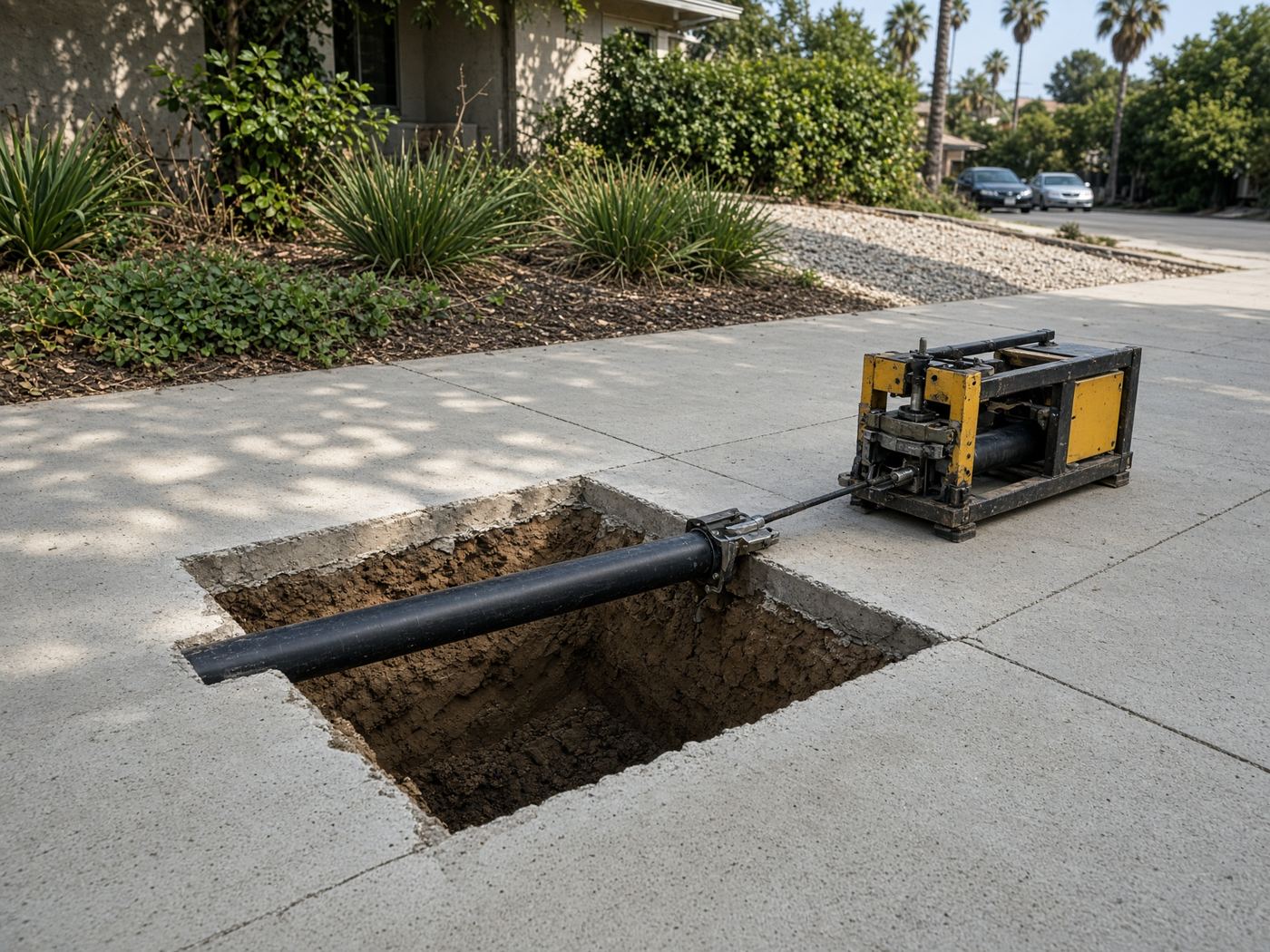
Possible approaches may include a targeted excavation, replacing a section, or trenchless methods when the line and site are suitable. No single technique is best for every property.
The right sequence is diagnosis first, options second.
Why Los Angeles properties can be especially vulnerable
Many Los Angeles neighborhoods combine older infrastructure with established landscaping. A property may also have sewer work from different eras, meaning several pipe materials or connection types can exist on the same line.
That does not mean every older home has a root problem. It does mean homeowners should take recurring main-line symptoms seriously instead of assuming the sewer is “just temperamental.”
What to ask before approving a sewer repair
For a significant sewer proposal, ask:
- Can you show me the defect on camera?
- Where is it located and approximately how deep is it?
- Is the issue one section or a larger run?
- Is the line currently open and flowing?
- What happens if I choose maintenance instead of repair for now?
- What repair methods are realistic for this property?
- What is included in excavation, backfill, cleanup and restoration?
- Are permits or inspections required for this scope?
These questions do not slow down a good plumber. They help establish a clear scope.
Do not wait for sewage in the house to take the pattern seriously
The best time to understand a recurring sewer problem is after the line is open and before the next backup.
If you have already had roots cut from the sewer more than once, use the period between emergencies to request documentation and compare long-term options. A planned repair is generally easier to evaluate than a decision made while sewage is coming up through a shower.
Tree roots are not “bad.” They are simply taking advantage of moisture and an opening. The plumbing question is whether you are comfortable maintaining that opening or whether repairing it is now the better financial choice.
If recurring backups, root findings or multi-fixture drainage problems are happening at your Los Angeles property, ask for a sewer camera inspection and a clear explanation of what the pipe actually looks like before paying for another temporary fix.
Talk with Extreme Plumbing & Rooter
Extreme Plumbing & Rooter is a licensed Los Angeles plumbing company (CA #1086230) serving homes and businesses 24/7. If you want a clear diagnosis and a free, no-pressure estimate, call (818) 631-7296 or send a short message.